History of the Poinsettia
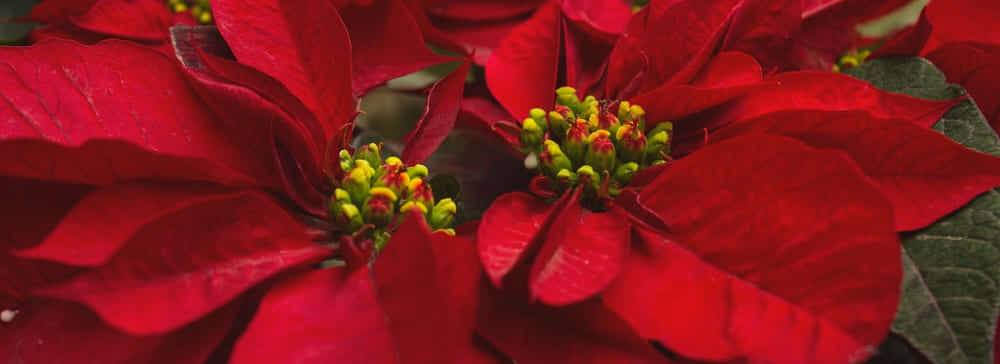
Poinsettias rank among my favorite plants. For me, they are not easy to care for (i.e., the right temperature, the right amount of water, and the right amount of light), but they make me happy whenever I see them on store shelves at this time of year.
Technically, this flowering plant is a shrub. The bright red petals, or other colors, are not flowers but are leaves known as bracts.

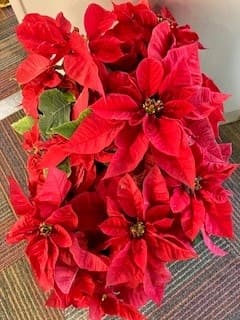
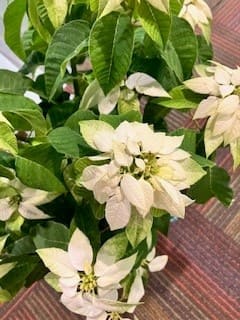
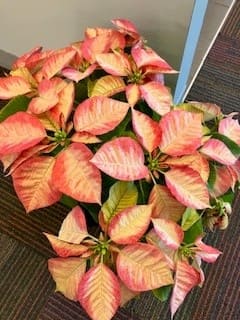
The poinsettia is indigenous to Mexico and Central America and was first described by Europeans in 1834. It is particularly well known for its colorful foliage and is widely used in Christmas floral displays; however, as you can see from the pictures, poinsettias are also white, pink, and some are variegated.
My work building is decorated this year with poinsettias for their holiday theme. There are probably over 1,000 in various spots on several floors. This morning, I took some photos to capture the various colors and the different distinctions in the bracts, and this piqued my curiosity to delve a little more into the history of this beautiful plant.
The poinsettia derives its common English name from Joel Roberts Poinsett, who was a botanist and the first United States minister to Mexico. He is credited with introducing the plant to the US in the 1820s.
The poinsettia is the world’s most economically important potted plant, and each year in the US, approximately 70 million poinsettias are sold in a period of six weeks.
December 12 is National Poinsettia Day, marking the anniversary of Poinsett’s death.
So today, thank Mr. Poinsett for giving us the ability to enjoy this beautiful non-native plant during this most special time of the year. If you haven’t purchased your poinsettia just yet, go out and get one. Take the time to admire this plant that grows so plentifully outdoors in our South of the Border neighbors.

